Tuesday, April 26, 2016

Gearing Up For Trouble!


On paper, the recent approval by the Maryland Transportation Authority to allow bicyclists to cross the Thomas J. Hatem Memorial Bridge starting on July 1st appears to be a great victory for Harford County cyclists and a step towards progressive policy decisions in reclaiming roadways for bike riders around the state.  In reality, however, the seemingly bike-friendly and environmentally-responsible decision may be creating more issues than it solves for vehicles and cyclists alike. 

The logic behind the decision to open the bridge to cyclists is simple.  Local cyclists have long clamored for a connection between Havre de Grace and Perryville.  The East Coast Greenway, a roughly 3,000 mile developing trail system between Maine and Florida, has also backed a connection across the Susquehanna River, as it would provide a vital link for the developing network.

Using the Hatem Bridge seems like a no-brainer, and there is no denying that cycling in Maryland has become much easier and safer in recent years.  Campaigns to raise driver awareness coupled with laws that address bicycle safety and a right-of-way regulation have vastly improved the cycling experience throughout the state and have led to a rise in ridership.  Harford County’s back roads, in particular, have become an outstanding backdrop for cyclists looking to log heavy miles while taking in some magnificent scenery. 

The Maryland General Assembly has certainly done its share to regulate vehicle and bicycle safety, most recently passing a comprehensive bill - House Bill 214 - expanding the responsibility a driver has when sharing a road with bicycles, among other vehicles.  Most notably, it clearly defines that, when passing a bicycle sharing the same road, a vehicle must exercise caution by giving three feet of distance between the car and the bicycle.  Under conditions in which three feet is not possible, as is the case with the Hatem Bridge, the driver must “slow to a reasonable and prudent speed that is safe for existing weather, road, and vehicular or pedestrian traffic conditions” and “may not endanger, impede, or interfere with the bicycle [...] or any other traffic using the highway.”

However, cyclists looking to extend their rides over the Hatem Bridge after July 1st may be putting themselves in unnecessary danger when crossing, while drivers caught on the bridge may find themselves being forced to a crawl when crossing the 1.3 mile expanse.

The main flaw in this plan is trying to retrofit a 20th century roadway so it adheres to 21st century road-sharing values.  The Hatem Bridge, opened in August of 1940, was designed as a narrow two lane road in each direction with no shoulder.  The claustrophobic nature of the bridge makes even the most capable drivers feel trepidation while crossing.  Adding bicycles to the mix will make the span even more tenuous. 

Experienced cyclists are well aware of the implications of sharing a traffic lane with vehicles.  The fear of trucks and cars barreling towards them coupled with the impatience of tailgaters as they wait for a break in traffic to merge can ruin any cyclists’ ride.  Cyclists can also expect to hear the requisite drive-by insults and blaring horns that are commonplace with shared-lane cycling, since many drivers fail to recognize bicycles as equal in lane usage on roads. 

Drivers, meanwhile, will not only have to come to grips with trips across the bridge taking one and a half or even twice as long, as two lanes of traffic are forced to condense to one, but will also be forced to navigate the strain of a shared roadway with bicycles on the cramped bridge.  Road sharing with bicycles is stressful enough for an unaccustomed driver, let alone being forced into it on a narrow bridge. 

It also stands to reason rates of accidents between two vehicles, and, perhaps more terrifying, between vehicles and bicycles will rise rapidly.  Just last year, the Maryland Vehicle Association released a report on bicycle safety, which stated that “over the past five years there was a six percent increase in the number of crashes” between bicycles and vehicles.  Of those crashes, according to the same report, “more than 80 percent of the crashes resulted in a death or injury” 

All of these factors combined point to a singular rationale that allowing bicycles to share lanes with vehicles across the Hatem Bridge will ultimately not benefit either group.  Drivers will be upset with cyclists, and cyclists will be upset with drives.  Unless an alternative crossing is developed that does not pit vehicle and bicycle against one another, such as the plan of retrofitting the Amtrak rail crossing with a bicycle lane, it stands to reason that cyclists will still plan to steer clear of a river crossing for quite some time.   

Blog Post by Joshua Marx
Blogger for the Havre De Grace Green Team

Wednesday, February 24, 2016

HdG Green Team 2016 Annual Membership Meeting and Elections

Havre De Grace Green Team

Annual Membership Meeting and Officer Elections
  • Are you looking to move your community further in a more environmentally sustainable space?
  • Do you want to know what climate change and environmental racism are and what they mean for you?
  • Are you looking to meet like minded people, share a meal or dig your hands into the cool, moist dirt?
Then join us!
The Havre De Grace Green Team on March 8, 2016 from 7:00 pm to 8:30 pm for our annual member meeting.

This years meeting will be held at the Havre De Grace Police Department at 715 Pennington Avenue, Havre De Grace, MD.

During this time we will be holding our annual elections of officers and provide updates to our current green initiatives. You are always welcome to volunteer for an initiative or start one yourself!


Our current initiatives include:
 
Help Turn Havre De Grace

Havre De Green 


Friday, January 29, 2016

Onions - Vegetable Garden Plant Guide

Vegetable Garden Plant Guide
Havre de Grace Green Team
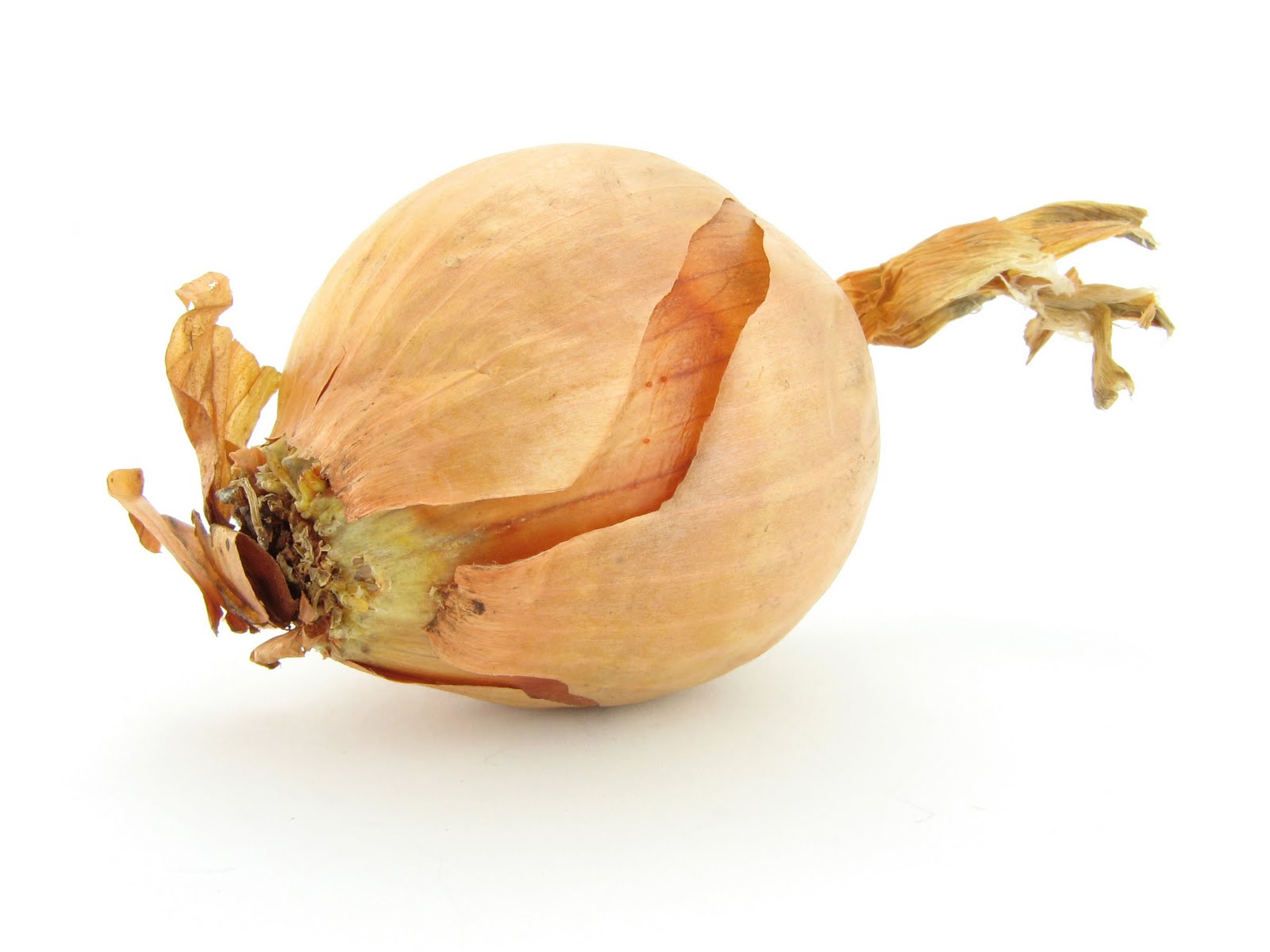
Onions
Onion.jpg

INTRODUCTION

The onion, also known as the bulb onion or common onion, is a vegetable and is the most widely cultivated species of the genus Allium.  The onion is most frequently a biennial or a perennial plant, but is usually treated as an annual and harvested in its first growing season.
Onions are often grouped according to taste (mild and strong flavored), color (white, yellow, and red) and use (storage or freshly eaten).  Globe varieties tend to keep longer in storage.
Onion cultivars also have different requirements as to the number of hours of daylight required to make an onion bulb as described below:
  1. Long Day - bulb sets when it receives 14-16 hours of daylight and is adapted to Northern summers;
  2. Short Day -bulb sets with about 12 hours of daylight and are used in the deep South for winter production;
  3. Intermediate -  Maryland Zone 7 community gardener's can experiment with all groups, although long day and intermediate types will probably perform better in our area.


This is an excerpt from our new Vegetable Garden Plant Page on the Havre De Grace Green Team website.  For more information on Onions and other Vegetable Garden Plants please see us at:
http://www.hdggreenteam.org/vegetable-plant-guide.html

Monday, January 11, 2016

A Healthy Community Garden Plot Requires Healthy Soil - Part 3


III.    Amendments of Healthy Soil

Vegetables and edible herbs need good healthy soil. Soil that is hard, rocky, soggy, or nutrient-poor will only provide vegetables and herbs that are weak and spindly. For a 100 square foot community garden plot, the gardener should strive to dig or add in 1” of aged or composted organic matter bi-annually. The vegetables and herbs planted in an organic rich soft soil will be able to grow roots more deeply and soak up nutrients that will ensure you will have healthy and productive plants.

Various types of soil amendments exist that can help add the macro and micro nutrients to your organic garden such as:

  • Composted Manure is aged for at least 6 months prior to using it in a vegetable garden. High in Nitrogen, Phosphorus, Potassium and other micro nutrients, the mixture feeds plants, improves soil structure and aids in water retention. Soil bacteria found in composted humus and manure aid in the decomposition of leaf and other organic matter present in the soil; 
  • Composted Humus is made up of decomposed plant material; the addition of plant humus to the organic vegetable garden improves soil structure by clumping soil particles. As organic material decays nutrients are released to help feed plants. Properly prepared hums compost can help to prevent and fight soil borne diseases that affect many plants.
Most organic fertilizers are made from combination of organic peat, animal bone meal, animal blood meal, and fish meal. Plant wastes from agriculture and sea weed, and lastly bio-solid sewage sludge. Be selective with what you use and do some research. Pay attention to the labeling and ensure the macro and micro nutrients listed are absolutely necessary for your garden and follow the directions closely.

A health community garden plot is made up of so much more then minerals and organic matter, water and air. Microscopic and other organisms; such as earthworms and insects, in your soil provide pathways for bacteria and fungi to reach clumps of matter that once broken down provide rich nutrients to the roots of your plants. In essence, a healthy soil is a living soil!

There are numerous products that can be added to the vegetable gardens that are organic based, vice chemical. Diligent gardeners look for products with the OMRI symbol or visit their website; www.omri.org for a list of items that have met the standards for the United States National Organic Program guidelines.

Lastly, soil testing in the community garden can be done with kits purchased from local shops, big box stores, and online. However, nothing compares to have a professional soil test done, these tests are performed in labs that not only give you a nutrient readout, but provide recommendations on how much of what material to add to make up for nutrients lacking in your garden. Please see the University of Maryland Educational Extension webpage at https://extension.umd.edu/ for a listing of soil labs in our regional area.


This ends our 3 part blog series in regards to "A Healthy Community Garden Plot Requires Healthy Soil".  We hope that you might have learned a bit about your "dirt" and become more interested in growing your own healthy, nutritious garden.

Monday, January 4, 2016

A Healthy Community Garden Requires Health Soil - Part 2 of 3


II.                 Nutrient Chemistry of Healthy Garden Soil

Most gardeners are inundated and have a good working knowledge of the phrase; “Mind your N’s, P’s, & K’s!”  The three (3) main chemical nutrient requirements for any healthy soil are Nitrogen (N), Phosphorus (P), and Potassium (K): 
  •  Nitrogen (N) helps plants make the proteins they need to produce new tissues, too much nitrogen and you will have super green plants, but no flowers or buds;
  • Phosphorous (P) stimulates root growth, helps the plant set buds and flowers, improves vitality and increases seed size; 
  • Potassium (K) improves overall vigor of the plant and helps the plants to make carbohydrates and provides disease resistance.
However, not all gardeners realize that there are three (3) more chemical nutrients required for healthy soil; Calcium (Ca), Manganese (Mn), and Sulfur (S).  While not needed in as great a quantity as the main three (3), each has a vital role in the healthy garden soil: 
  • Calcium (Ca) is used by plants in cell membranes, at their growing points and to neutralize toxic materials. In addition, calcium improves soil structure and helps bind organic and inorganic particles together; 
  • Magnesium (Mn) is the only metallic component of chlorophyll. Without it, plants can't process sunlight; 
  • Sulfur (S) is a component of many proteins.
Finally, there are at least seven (7) other “micro-nutrients” required in trace amounts for a healthy soil: 
  • Boron (B) which is essential for germination and growth of pollen tubes; 
  • Chlorine (Cl) which helps plants with photosynthetic reaction; 
  • Iron (Fe) vital for nitrogen fixing and respiration; 
  • Zinc (Z) for the production of plant enzymes; 
  • Copper (Cu) which is essential for plants to be able to process carbohydrates and proteins, which helps increase the flavor of vegetables and fruits; 
  • Molybdenum (Mo) essential to help bacteria and microbes fix nitrogen into the soil; 
  • Nickel (Ni) essential for leaf and chute growth in plants, helps legumes to fix nitrogen into the soil. 
Next Week: Amendments to Achieve Health Garden Soil - Part 3 of 3